Frequently Asked Questions
Can engineered herringbone be used with underfloor heating?
Yes, engineered wood herringbone is specifically designed for underfloor heating. Its multi-layer construction allows it to handle the heat without the warping or gapping that affects solid wood.
How many times can an engineered herringbone floor be sanded?
This depends on the thickness of the real wood wear layer (lamella). Typically, a quality 4mm wear layer can be sanded 2 to 3 times, allowing the floor to last for decades
What is the difference between herringbone and chevron?
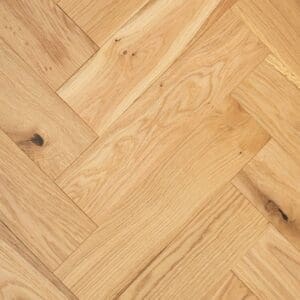
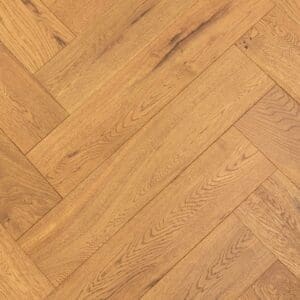
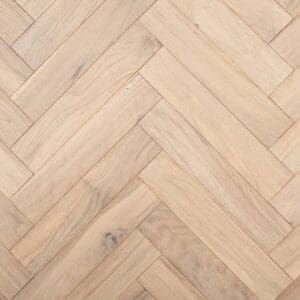
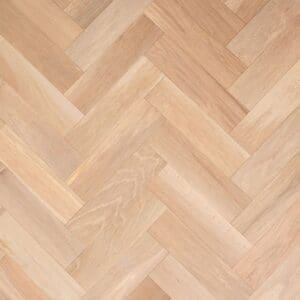
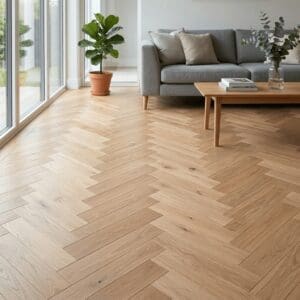
In a herringbone pattern, the planks are rectangular and meet at a 90-degree angle. In a chevron pattern, the ends of the planks are cut at an angle to meet in a continuous "V" or point.
Is a herringbone floor more expensive to install?
Yes, herringbone installation usually costs more than standard planks because the layout is more complex, requires more precision, and typically results in a slightly higher waste percentage during cutting.
How do I maintain my herringbone wood floor?
Regular sweeping and vacuuming with a soft floor attachment are essential. Use a well-wrung damp mop with a specialist wood floor cleaner, and avoid harsh chemicals or saturated cloths.