






14mm Engineered Wood Flooring
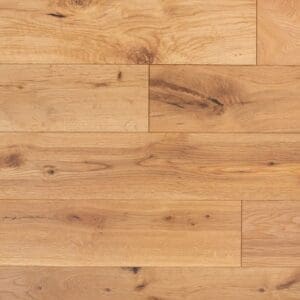
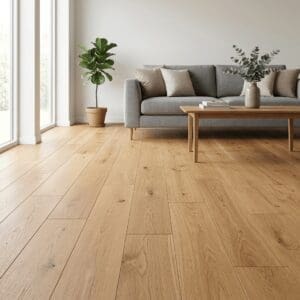
14mm is one of the most commonly specified engineered wood profiles in the UK and the standard thickness across many premium oak ranges. It carries a substantial real oak wear layer, typically 3mm and gives you the look, feel and refinishing potential of a much thicker board while remaining straightforward to install over most subfloors and underfloor heating systems.
14mm is widely available across both GF by Grosvenor Flooring, our own-brand oak range with online checkout and free samples and V4 Wood Flooring, including most of the V4 plank library. Browse the 14mm collection below or order up to 5 free GF samples.
What 14mm Engineered Wood Means
Two numbers describe any engineered board and it is easy to confuse them. The first is the total thickness of the board, in this case 14mm. The second is the thickness of the real oak wear layer bonded to the top, which on a 14mm board is typically 3mm. So you may see a 14mm floor written as 14/3, meaning a 14mm board with a 3mm oak wear layer over an 11mm multi-ply core. The wear layer is the number that matters most, because it governs how many times the floor can be sanded and re-finished over its life. A 3mm layer allows two to three sandings, which is why a good 14mm floor lasts for decades.
14mm vs 15mm vs 20mm
Thickness is mostly about the wear layer and the feel of the board underfoot, not durability of the surface itself. The table below sets out the common profiles.
| Total thickness | Typical oak wear layer | Feel and use |
|---|---|---|
| 9mm to 11mm | 2mm to 3mm | Slim boards and click formats; fewer sandings, tighter budgets |
| 14mm to 15mm | 3mm | The standard premium spec: substantial board, sand two to three times |
| 20mm | 6mm | The thickest, most substantial board: the most sandings, a forever floor |
14mm is the default for most premium plank and parquet projects: thick enough to carry a 3mm wear layer, substantial at the threshold and slim enough to fit over most subfloors without complication. Step up to 15mm or 20mm only if you specifically want a thicker wear layer or a heavier board feel. Our engineered wood flooring thickness guide covers the full picture.
Is 14mm Solid or Engineered?
Engineered. A 14mm engineered board is a 3mm real oak wear layer bonded to a stable multi-ply core, not a solid piece of oak. Solid 14mm oak does exist, but it moves too much across its width for a centrally heated home and is not recommended over underfloor heating. The engineered version gives you the same real oak surface with the stability a modern home needs, which is why 14mm engineered has become the standard specification where solid boards used to be used.
Fitting a 14mm Floor
14mm sits on a multi-ply core and can be floated, glued or secret-nailed over a properly prepared subfloor. With a thin underlay the finished height is around 15mm to 16mm, which clears most standard internal doors, though it is always worth checking against your own doors and thresholds. It is fully compatible with both wet and electric underfloor heating up to a maximum surface temperature of 27C. Acclimatise the boards in the room for at least 48 hours before installation and follow the supplied fitting instructions.
The 14mm Ranges We Stock
14mm runs right across the GF own-brand range in plank, herringbone and parquet formats and across most of the V4 plank library. GF is available to buy online with full pricing and free samples; V4 is sold on a Request a Price basis.
Key Takeaways
- 14mm is the standard premium engineered wood thickness: a real oak board with a 3mm wear layer on a stable multi-ply core, often written as 14/3.
- The 3mm wear layer can be sanded and re-finished two to three times, giving a 14mm floor a multi-decade lifespan.
- 14mm is not solid wood: it is a 3mm oak surface on a multi-ply core, which is what lets it work over underfloor heating where a solid 14mm board would move.
- It suits any dry room and works over underfloor heating up to 27C; step up to 20mm only if you want a 6mm wear layer or a heavier board.
- 14mm runs across the GF own-brand range and most of the V4 plank library, in plank, herringbone and parquet.
Explore Related Categories
- Other thicknesses: 9mm, 10mm, 11mm, 15mm or 20mm.
- By format: plank, herringbone or parquet.
- By colour: natural, light, grey or dark.
- Brands: GF own-brand or V4 Wood Flooring.
How to Buy or Get a Quote
For GF: every 14mm floor is available to buy online with full pricing, free samples and UK delivery, backed by a 25-year residential guarantee. You can see the collection on full-size display at our 24/7 Altrincham Smart Showroom or preview a floor in your room with our free AI room visualiser and supply and fit is available across the North West. For V4: sold on a Request a Price basis. Get in touch via our enquiry form, WhatsApp or phone and we will come back the same working day with a tailored, competitive price.




Frequently Asked Questions
What does 14mm engineered wood flooring mean?
14mm is the total thickness of the board. On a 14mm engineered floor the top layer is real oak, typically 3mm thick, bonded to an 11mm multi-ply core, so you may see it written as 14/3. The 3mm oak wear layer is the number that matters most, because it sets how many times the floor can be sanded and re-finished.
Is 14mm thick enough for engineered wood flooring?
Yes. 14mm is the standard premium specification. Its 3mm oak wear layer can be sanded and re-finished two to three times and the board reads as substantial at doorways and thresholds. Most premium plank and parquet ranges are built at 14mm.
Should I choose 14mm or 20mm?
14mm is the all-round default and suits the large majority of projects. Choose 20mm only if you want a thicker 6mm wear layer for the maximum number of future sandings, or you prefer the heavier feel of a thicker board underfoot. Both perform the same day to day.
Is 14mm engineered wood the same as 14mm solid wood?
No. A 14mm engineered board has a 3mm real oak wear layer on a stable multi-ply core. A 14mm solid board is a single piece of oak, which moves more with changes in temperature and humidity and is not recommended over underfloor heating. Engineered gives you the same oak surface with far better stability.
Will a 14mm floor fit under my doors?
Usually. With a thin underlay the finished height is around 15mm to 16mm, which clears most standard internal doors. It is always worth measuring against your own doors and thresholds first and doors can be trimmed slightly if needed.
Which ranges come in 14mm?
14mm runs across our own-label GF range in plank, herringbone and parquet, available to buy online with free samples and across most of the V4 plank library, sold on a Request a Price basis. Both can be supplied and fitted across the North West.
