




7mm Thick Laminate Flooring
7mm is the thinnest of the common laminate thicknesses and the most budget-friendly. It is a practical choice for updating a room on a smaller budget, or for a big project where cost is the main factor. It comes in the same wide range of realistic wood and stone designs as thicker boards. The thinner profile also has a real practical benefit: it is easier to match to existing floor heights and often clears doors without any trimming.
Our laminate ranges include 7mm boards. Quick-Step is the one we recommend by default and the name most associated with laminate in the UK. Evergreen and Lignum add further choice on design and price. All of it is available to buy online with free UK delivery.
Browse the full 7mm laminate range below to compare oak tones, looks and finishes, then order online for delivery across the UK.
Is 7mm Laminate Any Good?
It is a fair question. The honest answer is: yes, for the right rooms. A good 7mm laminate looks just as convincing as a thicker board and wears well in rooms that see light to moderate use, such as bedrooms, studies and guest rooms. It is also a sensible choice when budget is the priority or when you are covering a large area. Where it is less suited is the busiest, high-traffic parts of the home. It does not feel quite as solid or as quiet underfoot as a thicker board. If you want a more substantial feel or a floor for a busy hallway or living room, an 8mm or thicker board is worth the step up. For everything else, 7mm does the job at the lowest price.
The Thinner-Profile Advantage
One real advantage of 7mm is its slim profile. Because the board is thinner, the finished floor sits lower, which makes it easier to match the height of an existing floor in an adjoining room and to keep thresholds low and neat. It also means the floor is more likely to clear the bottom of your doors without you having to take them off and trim them, which saves time and hassle. If matching floor heights or avoiding door adjustments matters in your project, a thinner 7mm board can be the practical answer.
7mm vs 8mm and Thicker
The main question people ask is how 7mm compares with the standard 8mm and the thicker boards. The table sums it up.
| Feature | 12mm | 8mm | 7mm |
|---|---|---|---|
| Feel underfoot | Most solid | Solid; standard | Lightest; more give |
| Sound | Quietest over underlay | Quiet over underlay | Needs a good underlay |
| Subfloor tolerance | Most forgiving | Good | Needs a flat subfloor |
| Typical cost | Highest | Mid | Most affordable |
| Best for | Where feel matters most | Everyday rooms | Budget and lighter-use rooms |
7mm is the budget option and works well in lighter-use rooms. If you want a more solid, quieter floor for a busy area, an 8mm board is the usual step up. Above it sit 9mm, 9.5mm and 12mm boards.
Durability and AC Rating
As with any laminate, durability depends more on the AC rating than on the thickness. A 7mm board is commonly rated AC3, which is well suited to normal home use and lighter-traffic rooms. For the busiest areas you would usually choose a higher AC4 rating, which tends to come on thicker boards. The key is to match the AC rating to how much use the room gets: AC3 for bedrooms and studies, AC4 where traffic is heavier.
7mm in Every Look
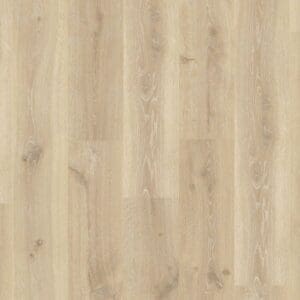
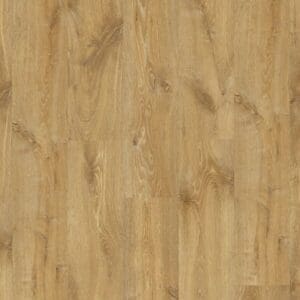
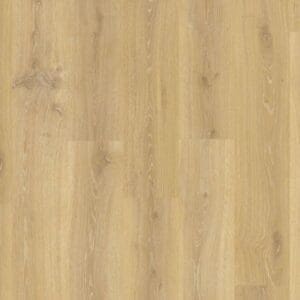
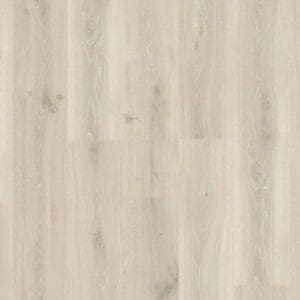
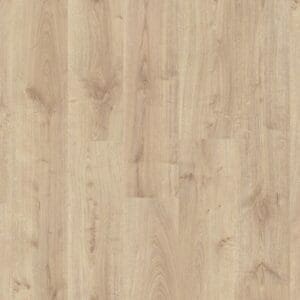
A 7mm board comes in the full range of laminate designs, so a smaller budget does not mean a smaller choice. Oak is the most popular, in warm and natural tones or cooler grey shades. You can also have 7mm in herringbone and wide plank boards. Whatever the look, a 7mm laminate gives you a clean, contemporary floor at the lowest price.
Why Underlay Matters More With 7mm
Underlay makes a difference under any laminate, but it matters most under a thinner board. Because a 7mm floor is lighter and has less built-in rigidity, a good quality acoustic underlay does a lot of the work: it softens footfall, reduces the hollow click a thin laminate can make and adds a little comfort and warmth underfoot. A thinner board also needs a flatter, better-prepared subfloor than a thick one, so it is worth getting the base clean, dry and level before you start.
Laminate and Underfloor Heating
7mm laminate works well with underfloor heating. Its thinner profile lets heat pass through efficiently, which makes it a good match for both electric and wet systems, subject to a maximum surface temperature of around 27C and the manufacturer’s guidance. Let the boards acclimatise in the room first and follow the installation instructions supplied with your chosen range.
The Laminate Ranges We Stock
Quick-Step laminate is the core of our range and the brand most people picture when they think of laminate flooring. Evergreen and Lignum broaden the choice with their own designs and price points. Every range is available to buy online, so you can compare looks and specifications side by side before you order.
How to Buy
Every 7mm laminate we sell can be bought online with free UK delivery across mainland Britain. We do not offer laminate samples, but you can preview any floor in your own room using our AI room visualiser on the product pages before you order. Choose your look and colour, order the quantity you need for your room and we will deliver it to your door.
Key Takeaways
- 7mm is the thinnest, most budget-friendly laminate, well suited to lighter-use rooms.
- Its slim profile makes it easier to match floor heights and often clears doors without trimming.
- It feels less solid than a thicker board, so an 8mm or above is better for busy rooms.
- Durability depends on the AC rating; a 7mm AC3 board suits bedrooms and studies.
- Buy online with free UK delivery and preview any floor with the AI room visualiser.
Explore Related Categories
- By thickness: 8mm, 9mm, 9.5mm or 12mm laminate.
- By colour: grey, dark or natural laminate.
- By look: herringbone, plank or stone and tile laminate.
- By performance: waterproof or click laminate.
- By room: bedroom, office or lounge laminate.
- Wider context: back to laminate flooring.

Frequently Asked Questions
Is 7mm laminate any good?
Yes, for the right rooms. A good 7mm laminate looks just as realistic as a thicker board and wears well in rooms with light to moderate use, such as bedrooms, studies and guest rooms. It is the most affordable thickness, which makes it ideal for a tight budget or a large project. For the busiest rooms, or if you want the most solid feel, an 8mm or thicker board is a better choice.
What is the difference between 7mm and 8mm laminate?
The difference is feel and price. An 8mm board is a little more solid and stable underfoot, a touch quieter over underlay and more forgiving of an uneven subfloor. A 7mm board is thinner and the most affordable. Its slim profile can help match floor heights and clear doors. For a busy room choose 8mm; for a lighter-use room on a budget, 7mm does the job.
Where should I use 7mm laminate?
7mm is best in rooms that see light to moderate use, where its lower price is the main appeal. Bedrooms, studies, guest rooms and home offices are all good candidates, as are large projects where cost matters. It is less suited to the busiest, high-traffic areas such as a main hallway or a busy family living room, where a thicker board will feel more solid and last longer.
Does 7mm laminate need underlay?
Yes. It matters even more with a thin board. A quality acoustic underlay softens footfall, reduces the hollow, clicky sound thin laminate can make and adds a little comfort underfoot. Because a 7mm board has less rigidity of its own, a good underlay and a flat, well-prepared subfloor make a real difference to how the finished floor feels and sounds.
Is 7mm laminate durable?
Its durability is set by the AC rating rather than the thickness. Many 7mm boards are rated AC3, which is well suited to normal home use and lighter-traffic rooms. For heavier use you would usually step up to an AC4 board, which tends to be thicker. Match the AC rating to the room and a 7mm AC3 laminate will last well in a bedroom or study.
