






White-Washed Engineered Wood Flooring
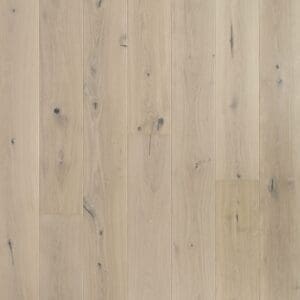
White-washed engineered wood takes the natural warmth of European oak and cools it into a pale, chalky, Scandinavian palette. A white pigment is brushed into the open grain so the timber’s texture is still clearly visible, but the overall tone reads as soft, airy and light-bouncing — ideal for homes that want wood underfoot without the amber warmth of traditional oak.
Engineered construction is the right way to lay a white-washed floor. A multi-ply birch or hardwood core keeps the board stable across UK seasons and underfloor heating cycles, while the real oak wear layer on top carries the white-washed finish exactly as the manufacturer intended.
White-washed designs run through GF by Grosvenor Flooring and V4 Wood Flooring — particularly the V4 Tundra, Deco and Alpine ranges where Scandinavian styling is core to the collection.
What “White-Washed” Actually Means
White-washed oak is produced by working a white pigment into the grain of a brushed or sawn board, then sealing it with a clear lacquer or hardwax oil. Unlike a painted floor, the grain, knots and character of the oak remain fully visible — the white tones the wood rather than covering it. The result sits between a natural pale oak and a fully limed or bleached Scandinavian floor.
White-Washed vs Limed vs Bleached
The three finishes are often used interchangeably but aren’t identical. White-washed uses a pigment brushed into the surface. Limed traditionally uses a lime-paste worked into open grain, giving a chalkier finish. Bleached physically lightens the wood itself before finishing. All three achieve a similarly pale look with subtle differences in texture and depth — any of them will sit happily in the same room.
Pairing White-Washed Oak with the Rest of the Room
White-washed floors work best with a cool-to-neutral colour palette: soft whites, pale greys, greiges, muted blues, sage greens and natural linen. Pair with pale cabinetry and brushed nickel or matt black ironmongery for a Scandi-coastal feel, or with darker furniture for a contrast-led Nordic scheme.
Where to Use White-Washed Engineered Wood
Suitable for any dry room. It’s particularly effective in rooms with limited natural light — the pale surface bounces what light is available and makes the space feel larger. Common choices include lounges, bedrooms, kitchens and conservatories.
Care and Longevity
White-washed finishes are protected by a clear lacquer or hardwax oil, so day-to-day care is identical to any quality engineered floor — sweep or vacuum regularly and damp-mop with a wood-safe cleaner. Good-quality white-washed ranges use UV-stable pigments, meaning the pale tone won’t yellow noticeably over time.
Explore Related Categories
- Other colours: light, natural, golden, medium, grey or dark.
- By finish: brushed, oiled or lacquered.
- By format: plank, herringbone or chevron.
- Brands: GF own-brand or V4 Wood Flooring.
How to Buy or Get a Quote
For GF: full online checkout, free samples and UK delivery. For V4: Request a Price via our enquiry form, WhatsApp or phone.


Frequently Asked Questions
Is white-washed the same as limed or bleached oak?
They're related but not identical. White-washed uses a pigmented white finish brushed into the grain; limed uses a lime-paste effect; bleached physically lightens the timber itself. All three achieve a pale, Scandinavian look but with slightly different textures and depths.
Will a white-washed floor yellow over time?
Good-quality white-washed engineered wood uses UV-stable pigments designed not to yellow. Lower-end products can warm up over the years, so check the finish spec before buying.
Does white-washed flooring show dirt more than mid-brown?
It shows dust less than very dark floors but shows dark debris (grit, mud) more than mid-browns. A good doormat routine and regular dry-mopping keeps it looking pristine.
