GF Engineered Wood Versailles
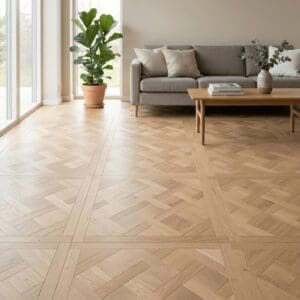
The GF Engineered Wood Versailles collection by Grosvenor Flooring has been developed to offer a more architectural and statement-led approach to wood flooring. Inspired by traditional parquet designs, these panels bring a sense of structure, symmetry and formality to a space, creating a natural focal point within both period and contemporary interiors.
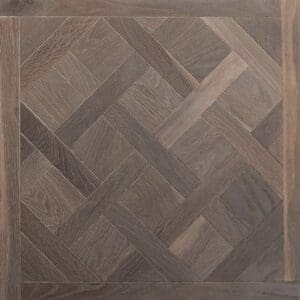
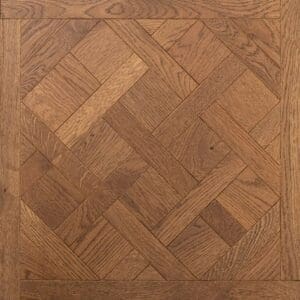
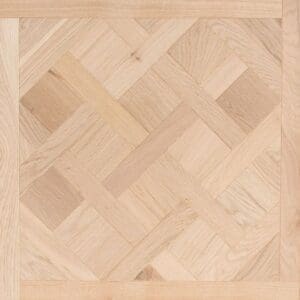
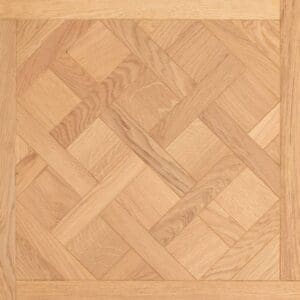
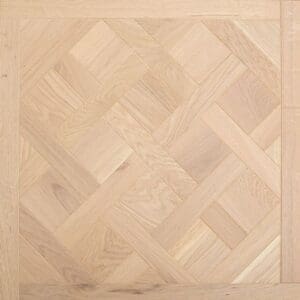
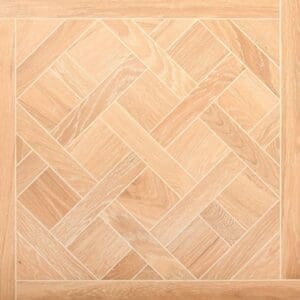
Versailles flooring is defined by its distinctive square pattern, formed from interwoven sections of timber. Historically associated with larger, more formal rooms, it has become increasingly popular in modern homes where it is used to introduce detail and character in a more considered way. Within the GF collection, each panel has been selected to ensure a balanced range of tones and finishes, allowing the pattern to stand out without overwhelming the space.
As with the wider GF Engineered Wood range, these panels are constructed using a layered design that improves stability and performance. This allows them to be used in environments where solid wood would be less suitable, including areas with underfloor heating. The result is a floor that retains the appearance and texture of real timber while meeting the practical demands of modern living.
Engineered wood Versailles panels combine traditional design with modern construction methods. Each panel features a real hardwood wear layer bonded to a stable, multi-layered core, which helps to reduce movement within the wood. This is particularly important in the UK, where changes in temperature and humidity can affect natural materials over time.
The GF Versailles collection offers a range of finishes designed to complement different interior styles. Lighter tones can create a more subtle, contemporary interpretation of the pattern, while warmer and darker finishes emphasise the depth and structure of the design. Brushed surfaces highlight the natural grain of the wood, adding texture and variation, while smoother finishes provide a more uniform and refined appearance.
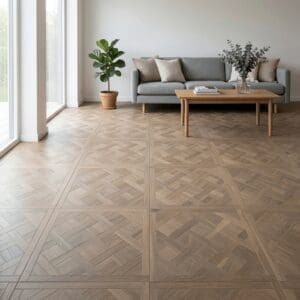
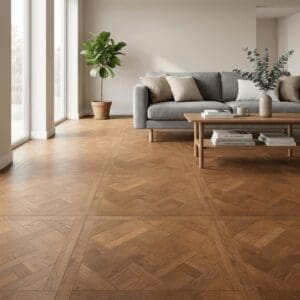
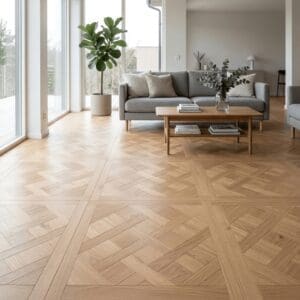
Due to the scale and layout of the pattern, Versailles panels are often used to create a more formal or feature-led floor. They work particularly well in larger rooms, entrance halls and open-plan spaces, where the pattern can be fully appreciated. When combined with simpler flooring in adjoining areas, they can also be used to define zones within a home.
Installation plays an important role in achieving the desired finish with Versailles flooring. The panels must be aligned carefully to ensure consistency across the space, and the subfloor must be properly prepared to support the structure of the floor. When installed correctly, the result is a clean, balanced layout that enhances the overall feel of the room.
In addition to its visual impact, engineered wood Versailles flooring offers practical benefits. The layered construction improves stability, while the natural properties of wood provide a warmer and more comfortable surface underfoot compared to harder materials. The use of real timber also allows the floor to age naturally over time and, if required, be refinished in the future.
The GF Engineered Wood Versailles collection has been created to offer a more distinctive and design-led flooring option within the wider range. By combining a classic pattern with carefully selected tones and finishes, it provides a considered way to introduce structure, detail and a sense of permanence into the home.
Buying Guide
Choosing Versailles panels is a significant design decision that requires careful consideration of both technical and aesthetic factors.
- Room usage / Location: Versailles panels are ideal for prestigious living areas, hallways, and dining rooms; however, they are generally not recommended for high-moisture “wet rooms” like bathrooms.
- Lifestyle: For busy households with pets or children, a “Rustic” grade with a brushed and oiled finish is often best for hiding minor scuffs and allowing for easier spot repairs.
- Budget: As a premium parquet product, Versailles panels represent a high-value investment that adds tangible property value and offers a longer lifespan than synthetic alternatives.
- Durability & Maintenance: Regular maintenance involves sweeping with a soft brush and using specialist wood cleaners; avoid excessive water and never use steam mops on real timber floors.
- Material Type Pros & Cons: Pros include unmatched aesthetic beauty and underfloor heating compatibility; cons include a higher initial cost and the requirement for a perfectly level subfloor.
- Aesthetics & Style: The Versailles pattern is a bold geometric statement that works best in medium-to-large rooms where the repeating square design has space to be fully appreciated.
- Comfort & Sound: Real wood is naturally warm and offers excellent acoustic properties when paired with professional-grade underlay by our fitting teams.
- Underfloor Heating: Engineered Versailles panels are fully compatible with both electric and water-based UFH systems, conducting heat efficiently without warping.
- Installation: We strongly recommend our professional “supply and fit” service, as the complexity of the geometric pattern requires expert layout and subfloor preparation.
- Sustainability: We focus on brands like V4 and Kahrs that prioritize sustainable forestry practices, ensuring your luxury floor is an environmentally conscious choice.
Frequently Asked Questions
Can Versailles panels be used with underfloor heating?
Yes, engineered Versailles panels are specifically designed for stability, making them the premier real-wood choice for homes with underfloor heating systems.
Is Versailles flooring made of real wood?
Absolutely; our engineered panels feature a top wear layer of 100% genuine hardwood, providing the authentic look and feel of natural timber
How does the "supply and fit" service work?
Our in-house experts manage the entire project, from providing a free quote and technical advice to performing the precision installation and subfloor preparation
Can these panels be sanded and refinished?
Yes, depending on the thickness of the real wood wear layer, Versailles panels can be sanded and refinished multiple times over several decades
Why is engineered wood better than solid wood for this pattern?
Engineered wood is far more stable than solid wood, meaning it won't warp, gap, or buckle as easily when exposed to temperature and humidity changes