






LVT Flooring · 10 min read
LVT vs Laminate Flooring – Which Is Better for Your Home?
LVT and laminate are the two most popular alternatives to real wood and stone flooring in UK homes. They look similar on a shop floor, they overlap in price and both claim to be durable and easy to maintain. But they are fundamentally different products, built differently, installed differently and – critically – they behave very differently when exposed to water, heat and heavy daily use.
In this article
- LVT vs Laminate at a Glance
- What Is LVT Flooring?
- What Is Laminate Flooring?
- Water Resistance – The Decisive Difference
- Durability and Lifespan
- Comfort, Warmth and Noise
- Appearance and Design Options
- Installation
- Cost Comparison
- Room-by-Room – Which Should You Choose?
- When Laminate Still Makes Sense
- Frequently Asked Questions
- See Both Side by Side – Our 24/7 Smart Showroom
Wondering about price? See our LVT cost and supply-and-fit pricing guide for real prices per square metre.
This is not a fence-sitting comparison. We sell both luxury vinyl flooring and laminate flooring at Grosvenor Flooring and we will tell you plainly which performs better in each situation. Every product mentioned here is on display in our 24/7 Smart Showroom at 82 Stamford New Road, Altrincham, WA14 1BS – visit any time, day or night to see and feel the difference for yourself.
Key Takeaways
LVT vs Laminate at a Glance
| Feature | LVT | Laminate |
|---|---|---|
| Waterproof | Yes | No – the HDF core swells if water gets in |
| Best rooms | Every room including kitchens and bathrooms | Living rooms and bedrooms, low-moisture only |
| Underfoot | Warm and quiet | Firmer, can sound hollow |
| Typical lifespan | 15 to 25+ years | 10 to 15 years |
| Upfront cost | Higher | Lower |
| Formats | Glue-down and click | Click |
What Is LVT Flooring?
LVT (luxury vinyl tile) is a multi-layered vinyl product with a photographic design layer protected by a transparent wear layer. The wear layer is measured in millimetres and directly determines how long the floor lasts. Entry-level LVT like Amtico First and Karndean Knight Tile uses a 0.3mm wear layer – adequate for bedrooms and lighter-traffic rooms. Mid-range products like Nordikka Original step up to a 0.55mm wear layer for hallways and kitchens. At the top end, Amtico Signature carries a 1.0mm wear layer – almost half the product is pure protective surface.
LVT comes in two main formats. Glue-down (dryback) LVT is bonded directly to the subfloor with adhesive, typically at 2mm to 3mm thick. It produces the thinnest, most stable result and is the professional installer’s first choice. Click LVT (rigid-core SPC) snaps together without glue, runs from 4mm to 8.5mm thick with built-in underlay and is suitable for confident DIYers.
What Is Laminate Flooring?
Laminate flooring uses a high-density fibreboard (HDF) core with a printed design layer and a protective melamine overlay. The design layer is a photograph of wood (or occasionally stone) sealed beneath a hard, clear surface. The HDF core is made from compressed wood fibres bonded with resin – and this is where laminate’s biggest weakness lies, because wood fibres absorb water.
Laminate is installed as a floating floor using a click system. Thicknesses typically range from 7mm to 12mm. Brands like Quick-Step have developed the click mechanism to a high standard – their Uniclic system is one of the easiest to fit – and modern laminate designs from ranges like Quick-Step Impressive and Quick-Step Majestic have improved considerably in recent years.
Water Resistance – The Decisive Difference
This is the single most important distinction between the two products and it is not close.
LVT is 100% waterproof. Every layer – from the vinyl backing through the design layer to the wear layer – is synthetic and completely impervious to water. You can submerge an LVT plank in a bucket overnight and it will be unchanged in the morning. This is why LVT dominates in kitchens, bathrooms and utility rooms – rooms where water contact is not a question of if but when.
Laminate is not waterproof. The HDF core absorbs moisture and once water penetrates a joint or edge, the board swells irreversibly. Some manufacturers market “waterproof” or “water-resistant” laminate (including ranges like waterproof laminate) and these do perform better than standard laminate, but they still cannot match the outright imperviousness of LVT. A washing machine leak, a child’s bath overflow, or even sustained condensation from a poorly ventilated kitchen will damage laminate in ways it simply cannot damage LVT.
Durability and Lifespan
LVT wear layers are measured and specified in millimetres, giving you a clear, comparable number to judge longevity. A 0.3mm wear layer suits bedrooms and spare rooms. A 0.55mm wear layer handles busy family kitchens and hallways. A 0.7mm or 1.0mm wear layer is effectively a lifetime floor in a domestic setting.
Laminate durability is rated using the AC (abrasion class) system – AC3 for residential, AC4 for heavy residential, AC5 for commercial. The problem with AC ratings is that they measure resistance to surface abrasion but do not account for impact damage. Drop a heavy pan on laminate and the surface can chip or crack. Drop the same pan on LVT and the vinyl flexes and absorbs the impact. In a busy kitchen with children, pets and dropped objects, LVT’s resilience is a meaningful practical advantage.
LVT also handles pet claws, chair legs and high heels better than laminate. The vinyl surface gives slightly under pressure rather than chipping and scratches are less visible because the colour runs through the wear layer rather than sitting beneath a hard shell.
Comfort, Warmth and Noise
LVT is softer and quieter underfoot than laminate. Glue-down LVT bonded to a concrete or plywood subfloor has zero flex and virtually no hollow sound – it feels solid and warm. Click SPC products like GF SPC Flooring or Nordikka Click SPC include built-in underlay that adds cushioning and sound absorption.
Laminate can sound hollow and clicky underfoot, particularly if installed without a quality underlay or over an uneven subfloor. It is harder and cooler to the touch than LVT. Decent underlay improves the experience significantly, but even with premium underlay, laminate does not match the quiet, warm feel of a well-installed LVT floor.
Both LVT and laminate are compatible with underfloor heating, though LVT’s thinner profile (especially glue-down at 2 – 3mm) transfers heat more efficiently than a 10mm+ laminate with underlay.
Appearance and Design Options
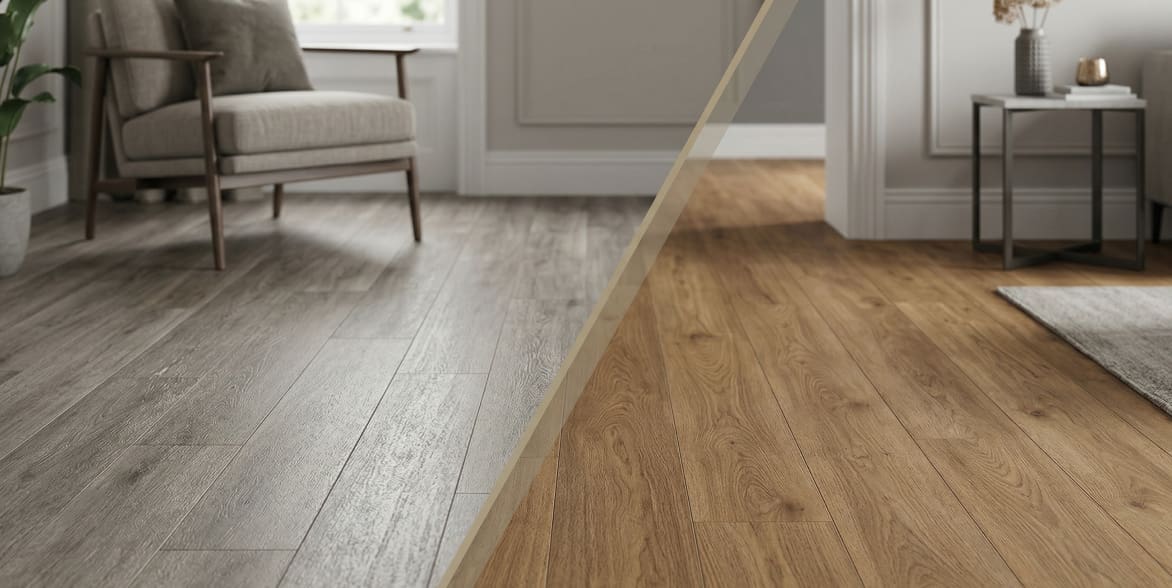
Modern LVT and laminate both produce convincing wood-effect and stone-effect finishes. At the budget end of both categories, the difference is marginal. But as you move into mid-range and premium territory, LVT pulls ahead.
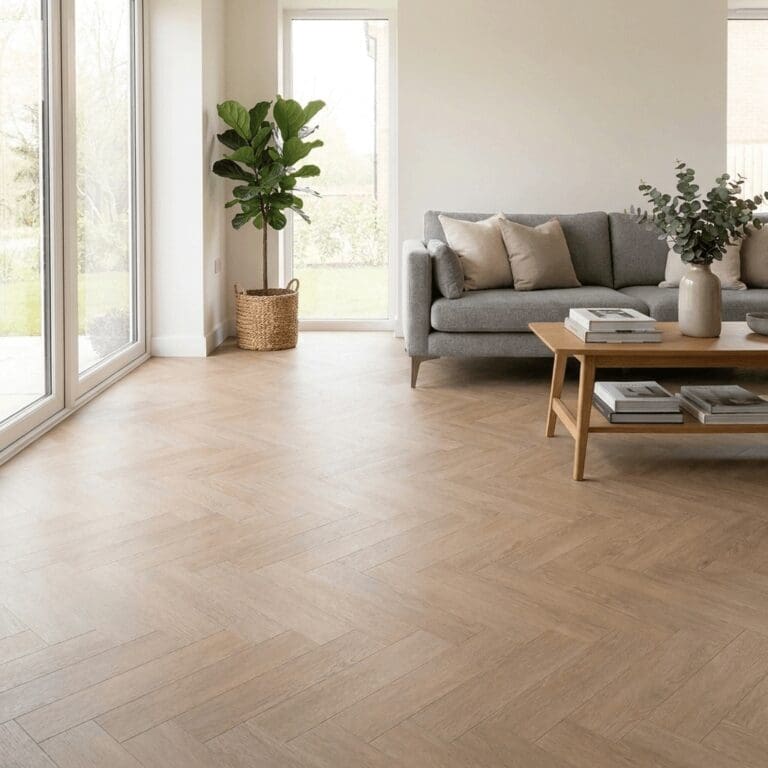
LVT offers registered emboss – where the surface texture follows the printed grain pattern exactly – across most mid-range and premium products. Karndean Art Select and Amtico Signature produce some of the most realistic wood and stone effects available in any flooring material. The variety of laying patterns available in LVT is also broader: herringbone, chevron, parquet, stone tile and pattern tile formats give you design flexibility that laminate cannot match.
Laminate is largely limited to plank formats. Herringbone laminate does exist, but the selection is far smaller than in LVT. Stone-effect laminate is rare and rarely convincing. If you want a tile look, a herringbone layout, or a bespoke pattern with borders and feature strips, LVT is the only realistic option.
What is GF Flooring?
Premium flooring, without the premium price
Glue-down LVT, click SPC and real oak engineered wood in more than 250 designs, with clear specifications and long guarantees.
See the GF range →Installation
Laminate has a slight edge here for DIY projects. Click laminate is straightforward to fit – it floats over underlay without adhesive and most competent DIYers can lay a room in a day. Quick-Step’s Uniclic system in particular is designed for easy, error-free fitting.
Click LVT is almost as simple – click SPC products snap together in the same way, though the rigid core requires slightly more precision on cuts. Glue-down LVT is a professional job – subfloor preparation, adhesive application and plank placement all need to be done correctly for a lasting result. But glue-down also produces the best finish: no movement, no expansion gaps visible at thresholds and a floor that feels completely solid underfoot.
Cost Comparison
Budget laminate starts lower than budget LVT, which is one reason laminate remains popular. A basic 8mm laminate can cost well under 15/m, while entry-level LVT like Nordikka Living or Elements LVT starts slightly higher. Our own GF SPC Flooring starts from 26.99/m with a 0.5mm wear layer, built-in underlay and a 25-year guarantee – positioned against premium laminate on price but offering genuine waterproofing that no laminate can.
When you factor in lifespan, the calculation shifts. A quality LVT floor in a kitchen will last 20 – 30 years. A laminate floor in the same kitchen – exposed to splashes, spills and moisture from cooking – may need replacing after 8 – 12 years once the HDF core begins to swell at joints. Over a 20-year period, one LVT floor often costs less than two laminate installations.
Room-by-Room – Which Should You Choose?
Kitchens
LVT wins outright. Water, spills, dropped utensils and heavy foot traffic make kitchen LVT the only sensible choice between the two. Glue-down options like Nordikka Original (0.55mm wear layer) or Amtico Form (0.7mm) handle the demands of a family kitchen effortlessly. For click-fit, GF SPC at 6.5mm is a practical and affordable solution. Kitchen laminate exists but carries a real risk of moisture damage over time.
Bathrooms and Utility Rooms
LVT only. Bathroom LVT and utility room LVT are fully waterproof. We would not recommend laminate in any room with a bath, shower, sink, or washing machine – even “waterproof” laminate carries a risk that LVT simply does not.
Hallways
LVT is the stronger choice. Hallway LVT with a 0.55mm wear layer handles the highest-traffic route in the house without showing wear. A herringbone LVT in the hallway – from brands like Nordikka Tromso or Bodo Herringbone SPC – creates a striking first impression that laminate cannot replicate as easily. Hallway laminate can work but is more vulnerable to wet shoes and umbrellas dripping at the front door.
Living Rooms
Both work well here. Lounge LVT offers the wider design range, quieter feel and better scratch resistance. Lounge laminate can deliver a good result at a lower entry price if the room is dry and furniture is fitted with felt pads. If you have pets or children, LVT’s resilience gives it the edge.
Bedrooms
Genuinely a toss-up. Bedroom LVT and bedroom laminate both perform well in this low-traffic, dry environment. A 0.3mm wear-layer LVT like Amtico First or Karndean Knight Tile is ideal, but a quality laminate like Quick-Step Impressive will also serve you well for years. Choose whichever you prefer the look and feel of.
Conservatories
Conservatory LVT handles the temperature swings and direct sunlight that are part of conservatory life. All the LVT brands we stock are rated for underfloor heating and tolerate thermal cycling. Conservatory laminate can expand and contract more noticeably with temperature changes and any condensation that forms at floor level poses a long-term risk to the HDF core.
When Laminate Still Makes Sense
We are not here to pretend laminate has no place. It does. If you are furnishing bedrooms or a spare room on a tight budget, a quality laminate like Quick-Step Classic or Quick-Step Creo delivers a convincing wood-effect floor at a low price point. If the room is dry, traffic is light and you plan to update the floor in ten years anyway, laminate is a perfectly reasonable choice.
Where laminate makes less sense is anywhere moisture is present, traffic is heavy, or you want the floor to last two decades. In those situations, LVT is the better investment every time.
Floor Finder
Not sure which floor to choose?
Answer a few quick questions about your room, who uses it and the look you like. Floor Finder picks the designs that suit you best, with prices per m² and a rough cost for your room.
Start Floor FinderFrequently Asked Questions
Is LVT better than laminate?
For most homes, yes – LVT is fully waterproof, warmer and quieter underfoot and lasts longer, which is why it has overtaken laminate as the most-specified hard floor. Laminate still wins on upfront price in dry, low-traffic rooms.
What is the difference between LVT and laminate?
The core. LVT is built on a waterproof PVC or stone-composite core, so water cannot damage it, while laminate has a high-density fibreboard core that swells if water reaches the joints. LVT is also warmer and quieter underfoot.
Is LVT more expensive than laminate?
Usually yes upfront, but LVT lasts longer and survives wet areas that would ruin laminate, so it often works out better value over the life of the floor. For real prices, see our LVT cost and pricing guide.
Which is better for a kitchen or bathroom?
LVT – it is waterproof, so it is the right choice for any room exposed to water. Laminate is best kept to dry rooms.
See Both Side by Side – Our 24/7 Smart Showroom
The surest way to decide between LVT and laminate is to see and feel them in person. Colour, texture, noise underfoot and the way the surface responds to touch all matter – and none of that comes across on a screen.
Our 24/7 Smart Showroom in Altrincham has full-size displays of every LVT and laminate range we stock. Request a door code online and visit whenever suits you – morning, evening, or weekend. No appointment needed, no sales pressure, just the floors and your own judgement.
We are located at 82 Stamford New Road, Altrincham, WA14 1BS – easily reached from across Cheshire, South Manchester and surrounding areas including Sale, Hale, Timperley, Bowdon, Knutsford, Wilmslow, Warrington and Macclesfield. For our checkout-enabled LVT brands – including Nordikka, Textures, Elements and GF LVT – you can order up to five free samples delivered to your door before committing.
Browse the full LVT flooring and laminate flooring collections online, or visit the showroom to walk on both and make your decision with confidence. You can also learn more about buying options through our LVT supply page, or explore our Altrincham showroom page for directions and more details.


Free tool · Room Visualiser
See any of our floors in your own room
Upload a photo of your room, choose a design, and in about 30 seconds you will see how it could look. It is free, and we email you a copy to keep.
- 1Choose a design
- 2Upload your room
- 3See it, then sample it

GF by Associated Weavers
Premium-spec glue-down, fairly priced
0.55mm wear layerPlank & parquet25-year warranty
Shop the range →