


Buying Guides · 6 min read
What Is Vinyl Flooring? A Plain-English Guide to Vinyl, LVT and Lino
 Reviewed by our team, led by Adam Williams, Managing Director
Vinyl flooring is a family of man-made floors built from layers of PVC. A printed design sits under a clear protective surface. It is waterproof, warm underfoot and easy to clean. It can also look remarkably like wood or stone. Beyond that simple answer, the word covers floors that behave very differently: a soft roll of kitchen vinyl, a thin plank glued to a screed and a rigid board that clicks together are all sold as vinyl. This guide explains how vinyl is made, how the main types differ, how it compares with lino, laminate and wood and which one we would put in your home.
In this article

Key Takeaways
How a Vinyl Floor Is Made
Cut through any modern vinyl floor and you will find the same basic layers, stacked from the bottom up:
Better floors line up the embossed texture with the printed grain, so the knots and grain lines you see are also the ones you feel. That detail does more than anything else to make a vinyl floor look real.
The Main Types of Vinyl Flooring
LVT stands for luxury vinyl tile. The name is used for planks as well as tiles. You may also see LVP, luxury vinyl plank, which means the same thing in plank form. Our SPC flooring guide untangles the rigid-core terms such as SPC and WPC. Our glue-down vs click LVT article helps you choose a fitting method.
| Type | Format | How it goes down | Feel and look | Our example |
|---|---|---|---|---|
| Sheet or cushion vinyl | Rolls up to 4m wide | Cut to the room, loose-laid or stuck down | Soft, warm, flatter print | Budget utility rooms |
| Glue-down LVT | Planks and tiles | Bonded to a smooth, levelled subfloor | Thin, solid, very realistic | GF Glue-Down LVT |
| Rigid-core click (SPC) | Planks and herringbone | Clicks together and floats | Firm, quick to fit, built-in underlay | GF Click SPC |
| Loose-lay LVT | Heavy planks | Held in place by weight and grip | Easy to lift and replace | Loose-lay range |
Is Lino the Same as Vinyl?
Not strictly. Linoleum was invented in the 1860s and is made from linseed oil, wood flour, cork and resins pressed onto a jute or hessian backing. Vinyl flooring came along in the twentieth century and is a plastic. Over the years the word lino stuck to any floor that came on a roll, so when most people in the UK say lino today they mean sheet or cushion vinyl. True linoleum is still made, mainly for schools, hospitals and offices, but it is far less common in homes.
The practical difference for a homeowner is that sheet vinyl is softer and cheaper, while LVT is tougher, more realistic and lasts much longer. If you are replacing old lino in a kitchen or bathroom, a 0.55mm LVT is a big step up.
Vinyl Compared With Laminate and Wood
Vinyl, laminate and engineered wood are the three floors most people shortlist. Vinyl wins on water: it is fully waterproof, so it is the safest choice for bathrooms, kitchens and utility rooms. Laminate has a very hard surface but a wood-fibre core that does not like water. Engineered wood is the real thing, warm and natural. It can be sanded, but it is not waterproof and it dents more easily. Our guides to LVT vs laminate and LVT vs engineered wood go into the detail.
How Long Does Vinyl Flooring Last?
Lifespan depends on the wear layer, the room and how the floor is looked after. As a guide, a 0.3mm wear layer suits bedrooms and other quiet rooms. A 0.55mm wear layer is the sensible standard for kitchens, hallways and family homes. A 0.7mm or 1.0mm wear layer is built for the busiest homes and light commercial use. Warranties reflect this: our GF Glue-Down LVT carries a lifetime residential warranty and GF by Associated Weavers a 25-year warranty. Grit is the main enemy, so a doormat and regular vacuuming add years to any vinyl floor. Our LVT cleaning and care guide covers the routine.
Which Vinyl Floor Should You Choose?
Start with the room, then the subfloor, then the look.
If you have already seen a floor you like from another brand, our Floor Finder shows the closest GF design. For buying vinyl on offer, our vinyl flooring sale guide explains what to check before you buy.
See Vinyl Flooring in Person
Our 24/7 Altrincham Smart Showroom has GF and the leading LVT brands laid out side by side, so you can feel the difference between glue-down and click floors. Request a door code online and visit when it suits you. GF samples are free if you would rather compare at home.
Who leads our guides
Managing Director, Grosvenor Flooring
Adam Williams is Managing Director of Grosvenor Flooring in Altrincham. He sets the standards our guides are written to and guides the team that reviews them, so the advice matches the floors we supply, the manufacturers' specifications and the way the fitters we work with install them.
More about Adam →Floor Finder
Not sure which floor to choose?
Answer a few quick questions about your room, who uses it and the look you like. Floor Finder picks the designs that suit you best, with prices per m² and a rough cost for your room.
Start Floor FinderFrequently Asked Questions
Is vinyl flooring waterproof?
The vinyl itself is waterproof. Glue-down LVT forms a sealed surface once fitted, which makes it the best vinyl for bathrooms. Click floors are waterproof through the board, but water can still find its way through the joints if it is left standing.
Is vinyl flooring good quality?
It can be excellent. Quality comes down to the wear layer, the realism of the print and texture and the construction. A good 0.55mm LVT will outlast a cheap laminate and look far better than old-style sheet vinyl.
What is the difference between vinyl and LVT?
LVT is one type of vinyl flooring. It comes as individual planks or tiles with a thicker wear layer, rather than as a roll. It looks and lasts better than sheet vinyl.
Can vinyl flooring go over underfloor heating?
Yes. Most LVT and rigid-core click floors are suitable for underfloor heating, usually with a maximum surface temperature of 27C. Check the specification of the floor you choose.
Is vinyl flooring warm underfoot?
Warmer than tile or stone. Glue-down LVT takes on the temperature of the room quickly. Click floors with a built-in underlay feel softer still.
Which vinyl flooring do you recommend?
For most homes, our own GF LVT. GF Glue-Down LVT and GF by Associated Weavers are glue-down floors at 0.55mm or more. GF by Associated Weavers also comes as a 0.3mm Click SPC for bedrooms and quieter rooms. GF Click SPC is the click option with a built-in underlay. All are priced online with free samples.
Further Reading
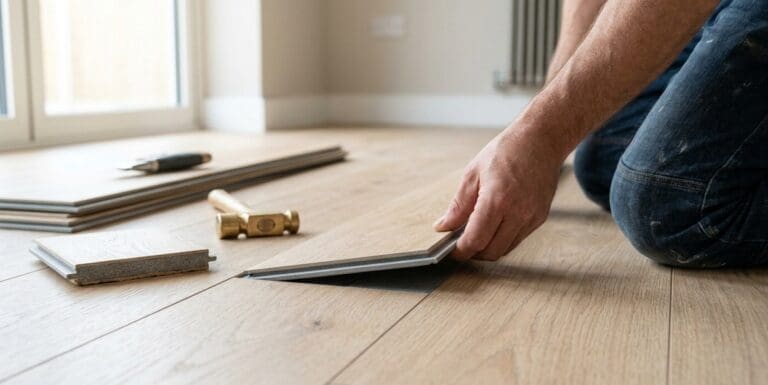 SPC flooring guide13 min read
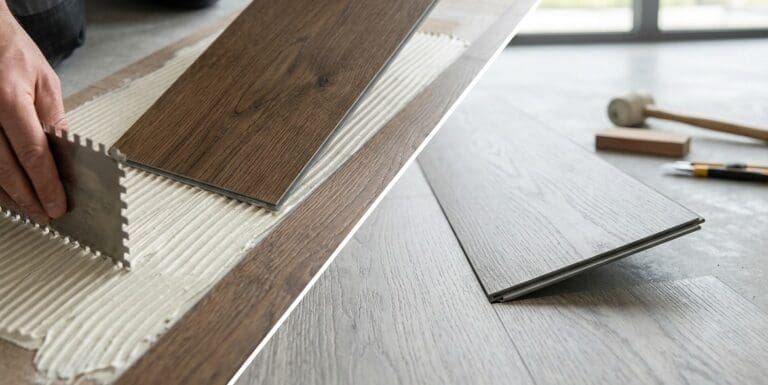 Glue-down or click LVT?11 min read
 LVT vs laminate11 min read
 Best LVT flooring in the UK17 min read
 Buying vinyl on offer8 min read
 About GF by Grosvenor Flooring8 min read
 LVT pros and cons6 min read
 How to choose an LVT colour6 min read
 How thick should an LVT floor be?7 min read

GF by Associated Weavers
Premium-spec glue-down, fairly priced
0.55mm wear layerPlank & parquet25-year warranty
Shop the range →